
Sinus & Nasal Conditions
Focused treatment for chronic, difficult, and recurrent sinus conditions.
Chronic Sinusitis

What It is & Symptoms
Chronic sinusitis (chronic rhinosinusitis) is sinus inflammation lasting 12+ weeks despite treatment, causing congestion, facial pressure, drainage, reduced smell, fatigue, and postnasal cough. It comes in two forms: without nasal polyps (the more common form, linked to recurring infections, allergic rhinitis, or structural drainage problems) and with nasal polyps (soft tissue growths blocking drainage, often harder to control and prone to recurrence).
Diagnosis & Treatment
Evaluation uses nasal endoscopy and CT imaging (which maps sinus anatomy and disease extent), with allergy testing when appropriate. Initial treatment includes saline irrigation, nasal steroid sprays, and managing contributing conditions like allergic rhinitis; if symptoms persist, balloon sinus dilation or functional endoscopic sinus surgery (FESS) may improve drainage and symptoms.
Recurrent Sinus Infections
What It is & Contributing Factors
Recurrent acute rhinosinusitis (RARS) means four or more acute sinusitis episodes a year, with symptoms fully clearing between episodes — each causing facial pain/pressure, nasal blockage, and thick drainage, sometimes needing antibiotics. Contributing factors include narrow/restricted sinus drainage pathways, a deviated septum, enlarged turbinates, allergic or nonallergic rhinitis, nasal polyps, and — less commonly — immune deficiency; treating each infection alone often doesn't resolve the underlying cause.
Diagnosis & Treatment
Nasal endoscopy and CT imaging (plus allergy testing when appropriate) identify structural or inflammatory drivers of repeated infections. Treatment starts with addressing contributors like allergic rhinitis or obstruction; when structural factors affect drainage, balloon sinus dilation or FESS may reduce infection frequency.

Balloon Sinus Dilation

How It Works & When It's Appropriate
Balloon sinus dilation (balloon sinuplasty) uses a small flexible balloon catheter to reach a narrowed or blocked sinus opening, gently expanding it to widen the drainage pathway before removal — without tissue removal or cutting. It may suit chronic or recurrent sinusitis of the frontal, maxillary, or sphenoid sinuses when narrowed/blocked openings are the main issue, confirmed via nasal endoscopy and CT imaging. Care follows a philosophy of using the least invasive effective treatment — sometimes medical management alone is enough, other times balloon dilation, traditional endoscopic surgery, or a combination is used.
Limits & Recovery
It doesn't address every sinus disease — it won't remove nasal polyps or treat extensive mucosal disease, and patients with polyps, significant anatomical variation, or disease persisting after prior balloon treatment may need traditional endoscopic sinus surgery instead. Recovery is shorter than traditional surgery — most return to normal activity in one to two days, with temporary congestion and drainage in the first week.
Endoscopic Sinus Surgery
Training & How FESS Works
Training in endoscopic sinus surgery came from the University of Pennsylvania under David Kennedy, MD, and Donald Lanza, MD — key figures in developing functional endoscopic sinus surgery (FESS). FESS is a minimally invasive procedure done through the nostrils with an endoscope and specialized instruments (no external incisions), reopening natural sinus drainage pathways by addressing obstructing tissue, nasal polyps, or diseased mucosa.
When It's Used & Recovery
FESS is generally considered when chronic or recurrent sinusitis doesn't improve enough with medical treatment (steroid sprays, saline irrigation, rhinitis management); CT imaging guides surgical planning. Scope varies by affected sinuses and disease extent — nasal polyps may be removed, and septoplasty or turbinate reduction added when indicated. Recovery typically involves one to two weeks of reduced activity, with congestion, drainage, and mild discomfort common in week one, plus postoperative saline irrigation and follow-up endoscopy.
Revision/Failed Sinus Surgery

Why Symptoms Persist
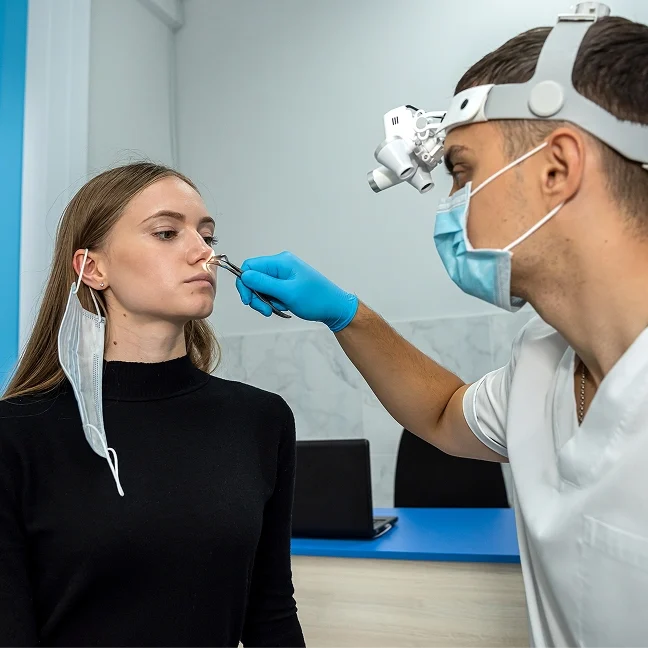
When sinus symptoms remain after surgery, a detailed reassessment — reviewing the prior surgery, current CT findings, nasal endoscopy, and contributing factors like allergic rhinitis, aspirin sensitivity, or immune deficiency — determines why the original surgery didn't work, rather than repeating the same treatment. Reasons symptoms persist include incompletely opened drainage pathways, scar tissue (synechiae) blocking passages, returned or remaining polyps, untreated allergic rhinitis or aspirin-exacerbated respiratory disease, unaddressed structural factors, or a missed original diagnosis.
Revision Surgery & Second Opinions
Revision surgery can be more challenging due to altered anatomy and scar tissue from prior procedures; the approach depends on evaluation findings and may include reopening scarred passages, removing recurrent polyps, addressing previously unopened sinuses, or combining these. Patients uncertain about recommended revision surgery are welcome to seek an independent second opinion before proceeding.
Nasal Obstruction
Structural & Inflammatory Causes
Nasal obstruction is difficulty breathing through one or both nostrils, from structural problems, inflammation, or both. Structural causes: a deviated septum (displaced wall narrowing one or both sides), enlarged turbinates (chronic enlargement limiting airflow), nasal valve collapse (narrowing/weakness of the airway's narrowest point, especially noticeable on inhale), and nasal polyps (growths that narrow or block passages). Inflammatory causes include allergic rhinitis, nonallergic rhinitis, and chronic sinusitis.
Diagnosis & Treatment
Nasal endoscopy examines the passages directly, with CT imaging added when sinus disease is suspected or surgery is being planned. Inflammatory blockage may improve with steroid sprays and allergy management; structural problems (septum, turbinates, polyps) may need surgery if symptoms persist despite medical treatment.
Deviated Septum
What It is & Symptoms
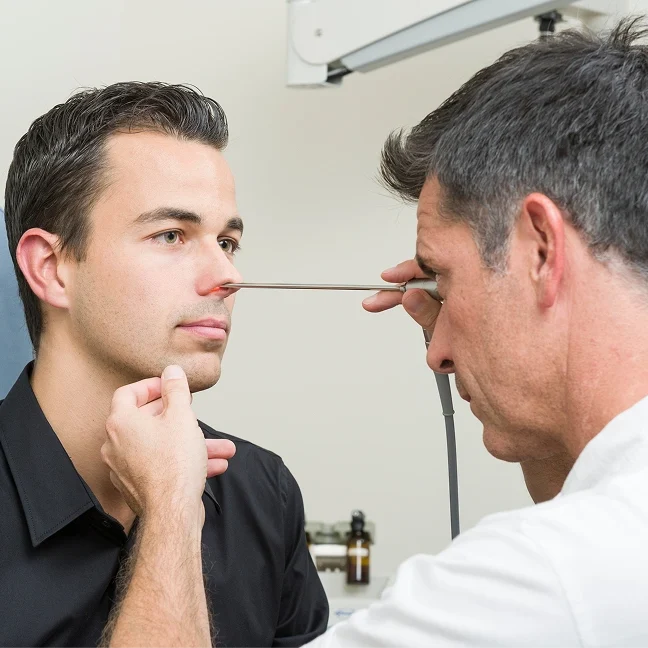
The nasal septum (bone and cartilage dividing the nasal cavity) can shift off-center — from birth or, more often, after a nose injury — narrowing the airway on one or both sides. Minor deviations are common and often symptom-free; more pronounced ones can cause one-sided nasal blockage, trouble breathing (especially during exercise or sleep), recurring sinus infections, nosebleeds, and snoring or sleep-related breathing problems.
Treatment
Septoplasty straightens the deviated septum through the nostrils with no external incisions or change to the nose's appearance, improving airflow; it may be combined with turbinate reduction or sinus surgery. Surgery isn't needed for everyone — those without significant symptoms, or whose symptoms improve with steroid sprays and allergy treatment, may avoid it — but it's recommended when obstruction or symptoms persist despite medical treatment.
Turbinate Reduction
The Turbinates' Role & When They Enlarge
Turbinates are mucous-membrane-covered bony structures that warm, humidify, and filter air; the inferior turbinates affect airflow the most. Enlargement (hypertrophy) — from allergic rhinitis, nonallergic rhinitis, ongoing inflammation, or enlarged turbinate bone itself — is a common cause of nasal obstruction, leading to persistent congestion, breathing difficulty, snoring, and sleep-related breathing problems.
Treatment
Nasal steroid sprays are usually first-line, along with antihistamines and allergy treatment, and often control symptoms without surgery. When medication isn't enough, turbinate reduction (via submucosal resection, radiofrequency reduction, or microdebrider-assisted reduction) shrinks turbinate size while preserving the mucosal lining, and may be combined with septoplasty or sinus surgery.
Rhinitis & Nasal Drainage

Allergic vs. Non-Allergic Rhinitis
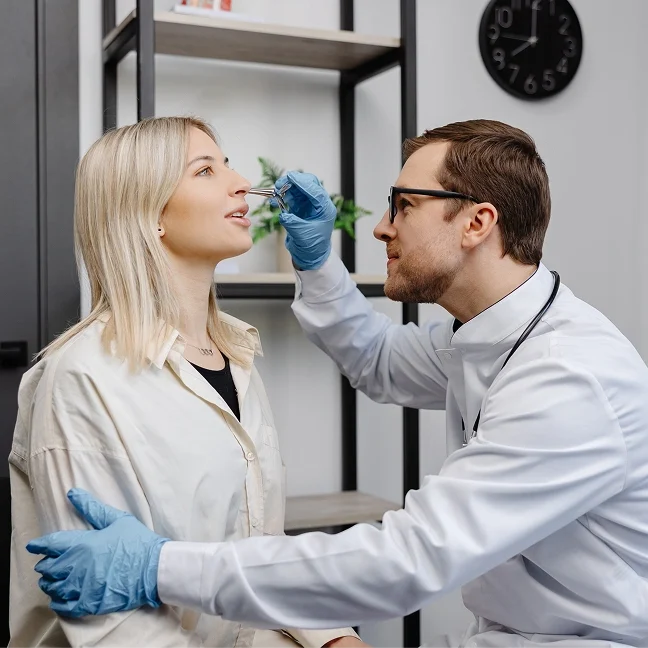
Rhinitis is inflammation of the nasal lining causing congestion, runny nose, sneezing, and postnasal drainage — often overlapping with sinusitis, sometimes requiring careful evaluation to distinguish the two. Allergic rhinitis results from immune reactions to airborne allergens (in the Las Vegas area: pollen, dust mites, pet dander, mold, cockroaches), causing sneezing, itchy nose/eyes, clear drainage, and congestion, treated with allergen avoidance, antihistamines, steroid sprays, or immunotherapy. Non-allergic rhinitis causes similar symptoms without an allergic response (negative allergy testing), triggered by temperature changes, strong odors, smoke, alcohol, or medications, and managed with nasal sprays and trigger avoidance.
Postnasal Drainage & Sinus Overlap
Postnasal drainage — mucus felt moving down the throat — occurs with either type of rhinitis and can cause throat clearing, coughing, or a lump-in-throat feeling; treating the underlying rhinitis usually helps. Because ongoing nasal inflammation can interfere with sinus drainage, rhinitis and sinusitis often occur together, making rhinitis management an important part of treating sinus disease.
Loss of Smell
What It is
Smell (olfaction) affects quality of life, safety, and food enjoyment. Anosmia is complete smell loss; hyposmia is reduced smell. Because causes vary widely, identifying the underlying problem is the key first step.
Common Causes
Nasal and sinus conditions (chronic sinusitis and nasal polyps blocking odors from reaching olfactory receptors), viral infections (upper respiratory infections, including COVID-19, damaging the olfactory lining, sometimes for months), head injuries (trauma damaging olfactory nerves, potentially permanently), medications (certain drugs interfering with smell), and neurological conditions (occasionally an early sign of a neurological disorder).

Nosebleeds

Why They Happen & Types
Nosebleeds (epistaxis) are common and usually not serious. Most are anterior (starting in the front septum, where vessels sit near the surface); posterior nosebleeds start deeper, are less common, but harder to control and may need more intensive treatment. Contributing factors: dry nasal tissue (common in dry climates like Las Vegas), nasal trauma (nose picking or injury), a deviated septum (turbulent airflow drying the lining), allergic rhinitis, blood thinners (aspirin, warfarin, newer anticoagulants), high blood pressure, and hereditary hemorrhagic telangiectasia (HHT, a genetic condition causing recurrent nosebleeds).
When to Seek Care & Treatment
Most nosebleeds stop with direct pressure; seek evaluation for frequent, hard-to-stop, or high-volume bleeding, bleeding while on blood thinners, or repeated nosebleeds with no obvious cause (to rule out a vascular lesion or other condition). Treatment depends on cause and severity — nasal moisturization, cauterization, or, for severe/recurrent posterior bleeding, arterial ligation or embolization — alongside addressing contributors like dry air, blood thinners, and high blood pressure.