Better Breathing Around the Clock
Connect nasal, allergy, and sleep concerns with comprehensive ENT evaluation.
Snoring

Causes & the ENT Perspective
Snoring happens when airflow through the upper airway vibrates soft tissues — most often the soft palate, uvula, and base of the tongue; nasal blockage worsens it by pushing toward mouth breathing, which alters airflow and increases snoring. An ENT evaluation looks for anatomical contributors, especially nasal obstruction from a deviated septum, enlarged turbinates, nasal polyps, or chronic rhinitis — treating the obstruction can significantly improve snoring when it's a major factor.
Snoring vs. Sleep Apnea & Evaluation
Snoring often occurs with obstructive sleep apnea, but snoring alone doesn't mean a person has OSA. Evaluation may include nasal endoscopy to find structural causes, plus a detailed history to determine whether a sleep study is warranted.
Obstructive Sleep Apnea
What OSA is & the ENT Role
Obstructive sleep apnea (OSA) occurs when the upper airway repeatedly narrows or closes during sleep, causing breathing pauses and disrupted sleep. CPAP remains the primary treatment for most patients, but an ENT evaluation can identify anatomical issues — especially nasal obstruction from a deviated septum, enlarged turbinates, nasal polyps, or chronic rhinitis — that may worsen OSA or make CPAP harder to tolerate; treating nasal obstruction doesn't cure OSA but may improve CPAP tolerance and reduce symptom severity.
Who Should Be Evaluated & Diagnosis
An ENT evaluation may help patients with OSA and significant nasal obstruction, those who can't tolerate CPAP due to nasal symptoms, or those considering surgical options. Diagnosis requires a sleep study (polysomnography or a home sleep apnea test); treatment is coordinated with sleep medicine specialists, with the ENT role focused on assessing and addressing upper airway anatomy affecting OSA or treatment options.

Nasal Obstruction & Sleep

Why Nasal Breathing Matters
Nasal breathing is preferred during sleep; when airflow is restricted, mouth breathing takes over, drying the throat, altering upper airway airflow, and contributing to snoring, sleep-related breathing problems, and poorer sleep. This can mean more snoring, worse OSA severity, dry mouth/throat on waking, harder CPAP tolerance, interrupted or unrefreshing sleep, and daytime fatigue — commonly from a deviated septum, enlarged turbinates, nasal polyps, or chronic rhinitis.
Diagnosis & Treatment
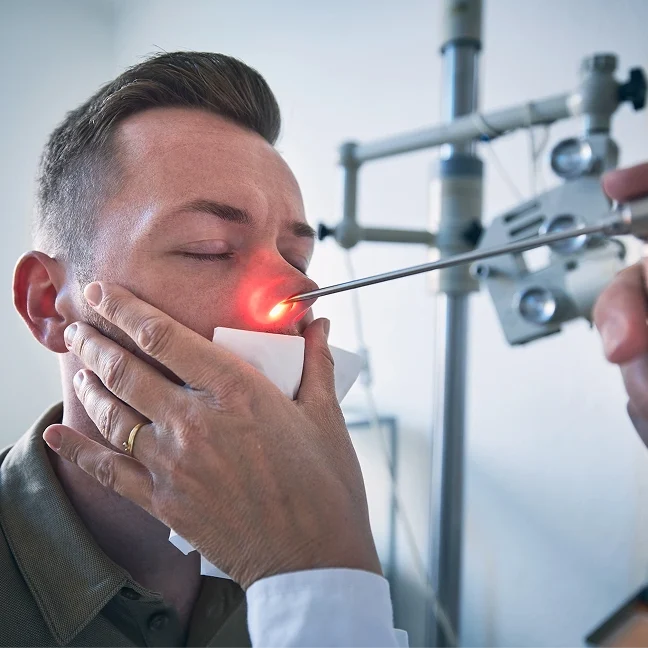
Nasal endoscopy directly views the passages to identify structural causes. Treatment may include nasal steroid sprays, allergy management, or surgery for structural problems — better nasal airflow can improve sleep quality and CPAP tolerance.
CPAP Intolerance
Why CPAP Becomes Hard to Use
CPAP is the most effective OSA treatment, but nasal obstruction is a common reason patients struggle with it — a blocked nose makes the mask uncomfortable, leading some to remove it or stop therapy. An ENT evaluation determines whether obstruction (from a deviated septum, enlarged turbinates, nasal polyps, or chronic rhinitis) is the cause.
Treatment & Coordination With Sleep Medicine
Treatment depends on whether inflammation or structural blockage is responsible — steroid sprays and allergy management for inflammation, surgery for structural problems like a deviated septum or enlarged turbinates. Improving nasal airflow makes CPAP more comfortable and improves adherence; care is coordinated with sleep medicine specialists, with the ENT role focused on nasal and upper airway anatomy.

Environmental Allergies

Local Triggers & ENT Effects
Las Vegas's desert climate limits mold and some grass pollen, but desert grasses, weeds, and trees produce significant pollen, and dust mites, cockroaches, and pet dander are common indoor allergens; warm temperatures much of the year can extend allergen exposure. Environmental allergies can contribute to allergic rhinitis, chronic sinusitis, nasal polyps, and Eustachian tube dysfunction — managing triggers is important, especially when steroid sprays alone aren't enough.
Testing & Treatment
Allergy testing (skin or blood) identifies specific triggers, guiding avoidance and whether immunotherapy (allergy shots or sublingual drops) is appropriate. Treatment options include allergen avoidance, antihistamines, nasal steroid sprays, and immunotherapy — the only treatment that modifies the underlying allergic response rather than just controlling symptoms.
Allergic Rhinitis
What It is & Types
Allergic rhinitis (hay fever) occurs when the immune system reacts to airborne allergens, releasing histamine and causing sneezing, an itchy/runny nose, congestion, and itchy eyes. Seasonal allergic rhinitis comes from outdoor pollen (grass, tree, weed) during specific seasons; perennial allergic rhinitis comes from year-round indoor allergens (dust mites, pet dander, mold, cockroaches). It can contribute to chronic sinusitis, recurring sinus infections, nasal polyps, and Eustachian tube dysfunction.
Management Options
Options include allergen avoidance (limiting known triggers), antihistamines (controlling sneezing, itching, runny nose), nasal corticosteroid sprays (the most effective single medication), nasal antihistamine sprays (fast symptom relief), and allergy immunotherapy (modifying the underlying response via injections or sublingual drops).

Non-Allergic Rhinitis

What It is & Common Triggers
Non-allergic rhinitis causes symptoms similar to allergic rhinitis — congestion, runny nose, postnasal drainage — but with negative allergy testing and no immune response involved; it's common and equally disruptive. Triggers include temperature changes (cold air, AC), strong odors (perfumes, cleaning products, smoke), alcohol, spicy foods (gustatory rhinitis), hormonal changes (pregnancy, thyroid disease), and certain medications, including overused decongestant sprays.
Rebound Congestion & Management
Frequent use of OTC decongestant sprays (oxymetazoline, phenylephrine) can cause rebound congestion (rhinitis medicamentosa), where the nose becomes dependent on the spray and severely congests when stopped — treated by gradually weaning off the spray, often with nasal steroid sprays. General management focuses on avoiding triggers, using nasal steroid or antihistamine sprays, and ipratropium spray for runny nose, plus addressing contributing medications.
Chronic Nasal Congestion
Structural & Inflammatory Causes
Chronic nasal congestion is ongoing stuffiness from structural problems, inflammation, or both. Structural causes include a deviated septum, enlarged turbinates, and nasal polyps (identified via nasal endoscopy, with CT imaging when needed). Inflammatory causes include allergic rhinitis, non-allergic rhinitis, and chronic sinusitis, which may improve with steroid sprays, antihistamines, and allergy management without surgery.
Overlapping Causes & Diagnosis
Structural and inflammatory problems often occur together — for example, a deviated septum can worsen rhinitis-related swelling through turbulent airflow — and both need addressing for the best result. A complete evaluation (nasal endoscopy, and CT imaging or allergy testing when appropriate) is needed to find the true cause, since treating symptoms alone may give only partial or temporary relief.