
Open Sinus Pathways Gently
A minimally invasive approach designed to improve drainage in selected sinus conditions.
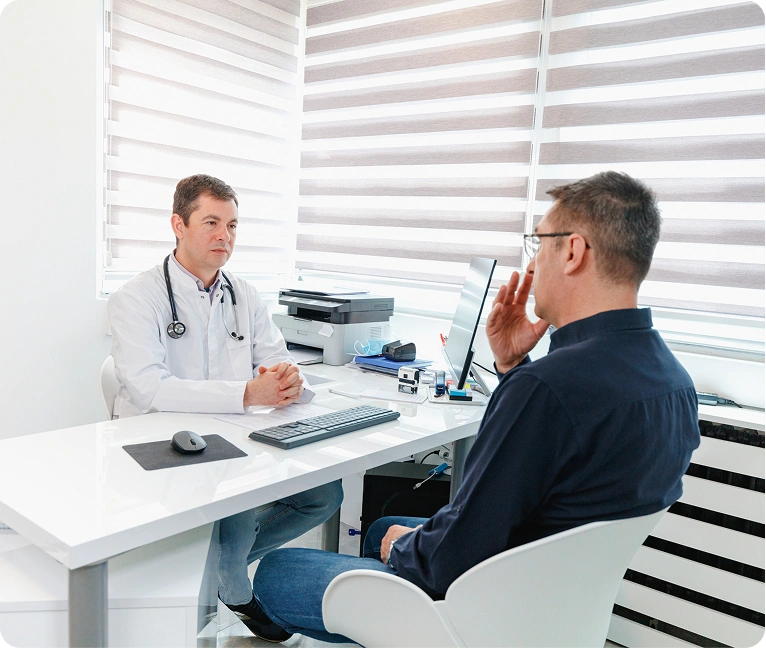
Choosing the Right Approach for Sinus Care
My goal is to identify the cause of your sinus symptoms and select the least invasive treatment that can effectively address the problem. For some patients, medical treatment or management of allergies and rhinitis may be enough. Others may benefit from balloon sinus dilation, traditional endoscopic sinus surgery, or a combination of approaches. In some cases, surgery may not be necessary.
This approach reflects my philosophy of using minimally invasive treatment when it is appropriate while focusing on effective care.
How Balloon Sinus Dilation Works
Balloon sinus dilation, also known as balloon sinuplasty, uses a small, flexible balloon catheter to reach a narrowed or blocked sinus opening. The balloon is gently expanded to widen the drainage pathway, then deflated and removed. Unlike traditional sinus surgery, the procedure does not require tissue removal or cutting.
When Balloon Dilation May Be Appropriate
Balloon dilation may be considered for chronic or recurrent sinusitis affecting the frontal, maxillary, or sphenoid sinuses when narrowed or blocked sinus openings are the primary concern. Nasal endoscopy and CT imaging are used to evaluate the sinus anatomy and determine whether this treatment is appropriate.
When Another Treatment May Be Better
Balloon dilation does not address every type of sinus disease. It does not remove nasal polyps or treat extensive mucosal disease, and some anatomical conditions may require a different approach. Patients with polyps, significant anatomical variations, or disease that continues after previous balloon treatment may benefit more from traditional endoscopic sinus surgery.
What to Expect During Recovery
Recovery from balloon sinus dilation is generally shorter than recovery from traditional sinus surgery. Most patients can return to normal activities within one or two days. Temporary nasal congestion and drainage may occur during the first week.