
Understand the Sounds You Hear
Explore possible causes of persistent ringing, buzzing, or other ear sounds.
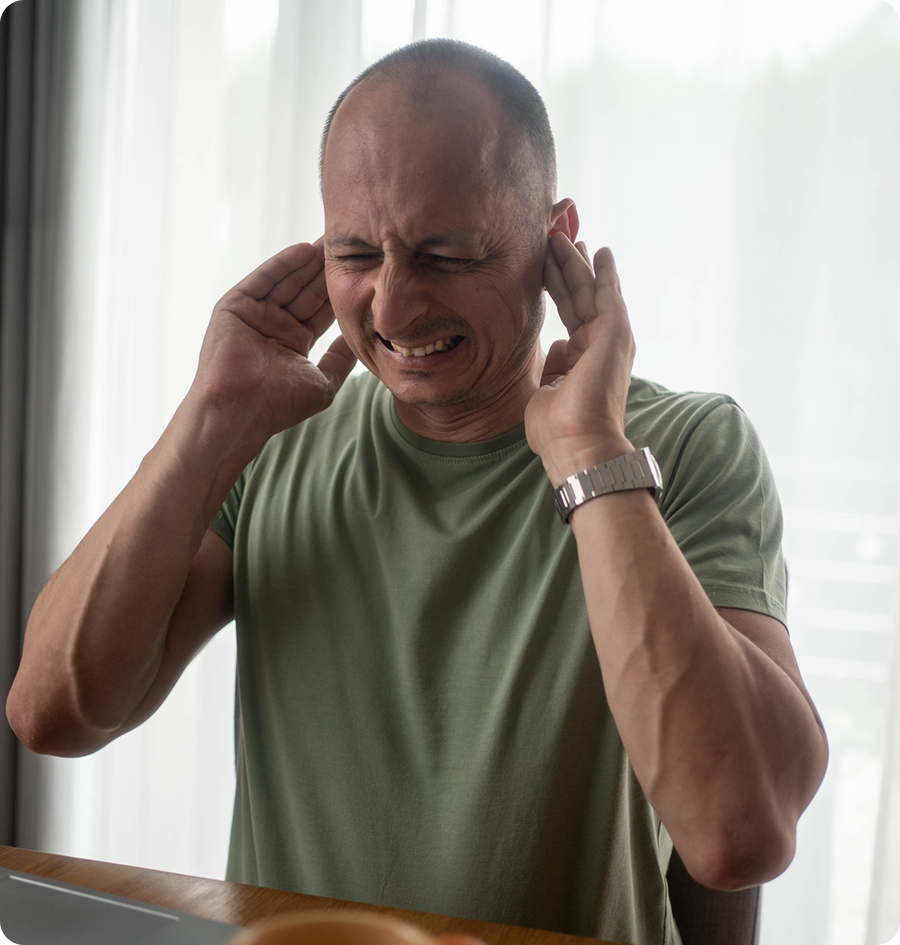
When You Hear Sounds That Are Not There
Tinnitus is the perception of sound, such as ringing, buzzing, hissing, clicking, or roaring, without an external source. It may occur in one or both ears, remain constant or come and go, and range from mildly bothersome to severely disruptive. Tinnitus is a symptom rather than a disease and can indicate an underlying condition that needs evaluation.
What Can Cause Tinnitus?
Noise-related hearing loss
Age-related hearing loss, also called presbycusis.
Eustachian tube dysfunction or middle ear fluid.
Otosclerosis
Eardrum perforation or middle ear disease.
Ménière's Disease
Acoustic neuroma, which is rare but important to rule out.
Ototoxic Medications
Cardiovascular conditions that can cause pulsatile tinnitus.
How I Evaluate Tinnitus
I begin with a detailed medical history and physical examination, including otoscopy and audiometry. Tinnitus that is pulsatile, occurs in one ear, or is accompanied by hearing loss or dizziness may require further investigation, including imaging.
When Tinnitus Pulses With Your Heartbeat
Pulsatile tinnitus is a rhythmic sound that follows the pulse. It can have different causes from nonpulsatile tinnitus and requires specific evaluation to identify or rule out vascular conditions.
Managing Tinnitus
When an underlying cause can be treated, addressing that condition may improve or resolve the tinnitus. When there is no correctable cause, management may include sound therapy, cognitive behavioral therapy, or hearing aids when hearing loss is present. There is currently no medication proven to be universally effective for tinnitus.